
How Often Does a Septic Tank Need Cleaning?
The 3 to 5 year range is a baseline, not a rule that fits every house. A two-person household with a properly sized tank might stretch past 5 years between visits. A family of six running laundry, dishes and a garbage disposal daily can fill the same tank faster than expected, and might need septic tank cleaning closer to the 3 year mark. Tank size matters as much as household size. If your Yuma property still has the original tank from a decades-old build, it may be smaller than what current code would require for the same house today, which shortens the interval. Commercial kitchens on a septic system face a separate clock entirely: grease interceptors get pumped once fats, oils, grease and solids reach 25 percent of the liquid depth, which can mean monthly service instead of a multi-year cycle. If you run a restaurant or food truck commissary in Yuma, grease trap pumping is worth scheduling on a fixed calendar rather than waiting for a warning sign. For homes, tracking usage against the household size is the more reliable guide, and a technician can measure sludge depth on site to tell you where you actually stand instead of guessing from the calendar alone.
What Happens If You Wait Too Long Between Pumpings?
Waiting past the tank's real capacity pushes solids into the drain field, and that is the expensive failure. Once solids clog the leach lines, you are looking at drain field repair or replacement, which costs far more than a pumping visit ever would. Slow drains, gurgling pipes, standing water near the tank, or a sewage smell in the yard are the signals to watch for. Our page on septic tank warning signs walks through what each symptom usually means. If you are already seeing backup, do not wait for a scheduled visit, call for emergency septic service instead. Homes and small farms around Yuma sometimes lean on a holding tank temporarily while a drain field issue gets diagnosed and repaired; holding tank rental covers that gap. Waiting also concentrates costs into one bad year instead of spreading pumping expense out. A tank pumped on schedule is a routine expense. A tank pumped after a backup usually comes with a cleanup bill, sometimes a repair bill, and lost use of your bathrooms while it gets sorted out.
Where Does Septic Pumping Cost Fall in Yuma?
Pumping cost depends mostly on tank access, tank size and how much buildup has to come out. Here is the general shape of pricing by visit type.
| service | duration | low | typical | high |
|---|---|---|---|---|
| septic pumping | day rate | $150 | $250 | $300 |
| septic pumping | weekend rate | $50 | $100 | $150 |
For a fuller cost breakdown by tank size and job type, see septic tank pumping cost. If your property is more rural, farther from Yuma's core, and the truck needs a longer haul or tricky access, expect pricing to sit toward the higher end of that band. Properties out near Rancho Mesa Verde, about 19.1 miles northwest of Yuma, or Somerton, roughly 20.7 miles northwest, sometimes see a modest trip charge folded into the quote. Ask up front so there are no surprises on the invoice.
Do Agricultural and Event Sites Need a Different Schedule?
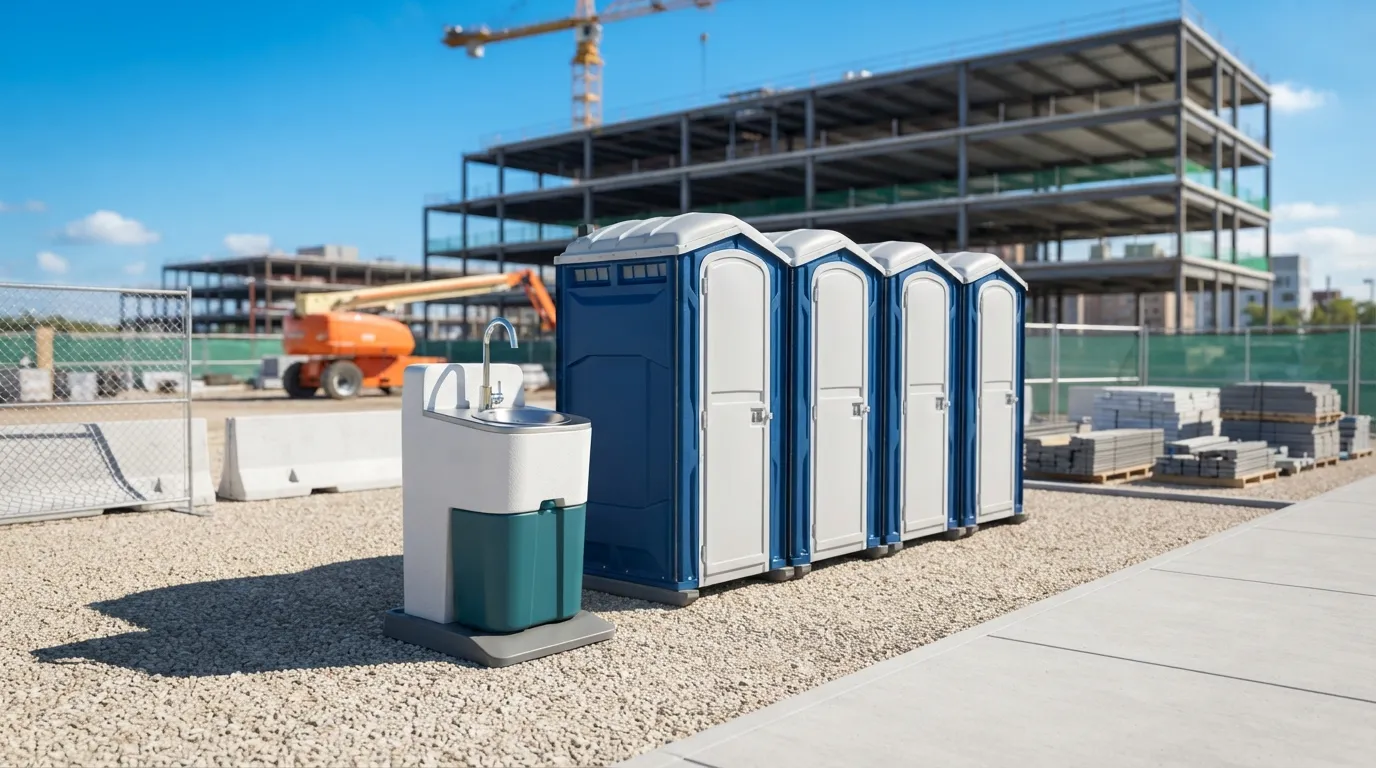
Yes, because usage volume and legal requirements differ from a house. Farms with hand-labor crews fall under OSHA 1928.110, which requires potable water, toilets and handwashing within a quarter mile walk of the workforce, at one facility per 20 employees, a very different math than a residential tank on a 3 to 5 year cycle. If you run farm and agricultural restrooms on a septic-fed system, plan on more frequent service tied to headcount, not years. Event sites are similar. A wedding, festival or county fair adds a short burst of heavy use that a residential tank was never sized for. Renting standalone units instead of routing a crowd through a home septic system protects the tank and the guests. Check event restroom rental, wedding restroom rental, or festival restroom rental if you have a one-day crowd coming through a property with a residential system underneath it. Construction crews working near Yuma face their own standard under OSHA 1926.51(c), which sets toilet counts by crew size rather than by septic tank capacity, so construction site services usually means renting portable units instead of leaning on an existing tank at all.
How do I know my tank's actual size?
Check your property records or the original installation permit, or ask a pumping technician to measure it on the first visit. A 1,000 gallon tank is common for smaller households, but older Yuma properties sometimes have smaller original tanks that fill faster than the standard interval suggests.
Can I extend the interval between pumpings?
Somewhat. Spacing out laundry loads, fixing leaky fixtures, and skipping the garbage disposal all reduce solids load. None of it replaces pumping entirely; it just stretches you toward the 5 year end instead of the 3 year end of the range.
What is the difference between septic pumping and septic cleaning?
Pumping removes liquid and floating scum from the tank. Full cleaning also breaks up and removes settled sludge from the bottom, which pumping alone can leave behind. Ask which service you are booking, since the terms get used loosely.
Do I need a permit to have my tank pumped?
Pumping itself typically does not require a permit, but tank repairs or replacements might. Confirm any permit question directly with the city rather than assuming, since this varies by scope of work.
Should I pump before or after a big event at my property?
Before. A tank that is already near capacity has no buffer for the sudden load from a family gathering or a small hosted event, and that is exactly when backups happen. Pumping ahead of the event, then supplementing with rented units for guest overflow, keeps the system from getting overwhelmed on the one day it matters most.
Next step
Get a delivery date
Tell us the address, the dates and the headcount. We size the order and confirm the route.