
Do You Need a Permit for a Porta Potty in Yuma?
Most residential and private-lot placements don't need a permit. A unit sitting on a driveway, a backyard, or inside a fenced construction site for a home renovation typically falls under the property owner's own use. Where it gets complicated is the curb. If a unit has to sit in the street, on a sidewalk, or anywhere in the public right-of-way, that's a different category, and it needs confirming with the city before you schedule delivery. This isn't unique to Yuma. Jersey City dumpster permit rules work the same way: private lot, no permit; public right-of-way, permit required. We haven't verified Yuma's specific ordinance number for right-of-way placement, so don't take a code citation from us on that point. Call the city and ask directly. For construction site services, the general contractor usually handles this conversation with the city as part of site logistics, and it pairs naturally with fencing off the temporary fence rental perimeter around the unit.
Is a Permit Required for a Dumpster on the Street?
Yes, in most cities that allow street placement at all, and Yuma likely follows the same pattern, though we have not verified a specific ordinance number for this. A roll-off dumpster rental parked in a driveway or on a private lot generally doesn't need city sign-off. The moment it sits on pavement the city owns, that's public right-of-way and the rules change. This is true whether you're comparing Delaware porta potty rental rules, roll-off dumpster rental Delaware requirements, or a dumpster permit in Yuma. The pattern holds because the underlying question is the same everywhere: who owns the ground the container sits on. Before you order a 10 yard dumpster rental or anything larger, check our dumpster permit requirements page and then call the city to confirm your specific address and placement. A 30 yard dumpster rental needs roughly 60 feet of straight clearance behind the delivery truck, so street placement often isn't practical anyway, and driveway or lot placement solves the clearance problem at the same time it avoids the permit question.
What Are the Placement Rules for Porta Potties?
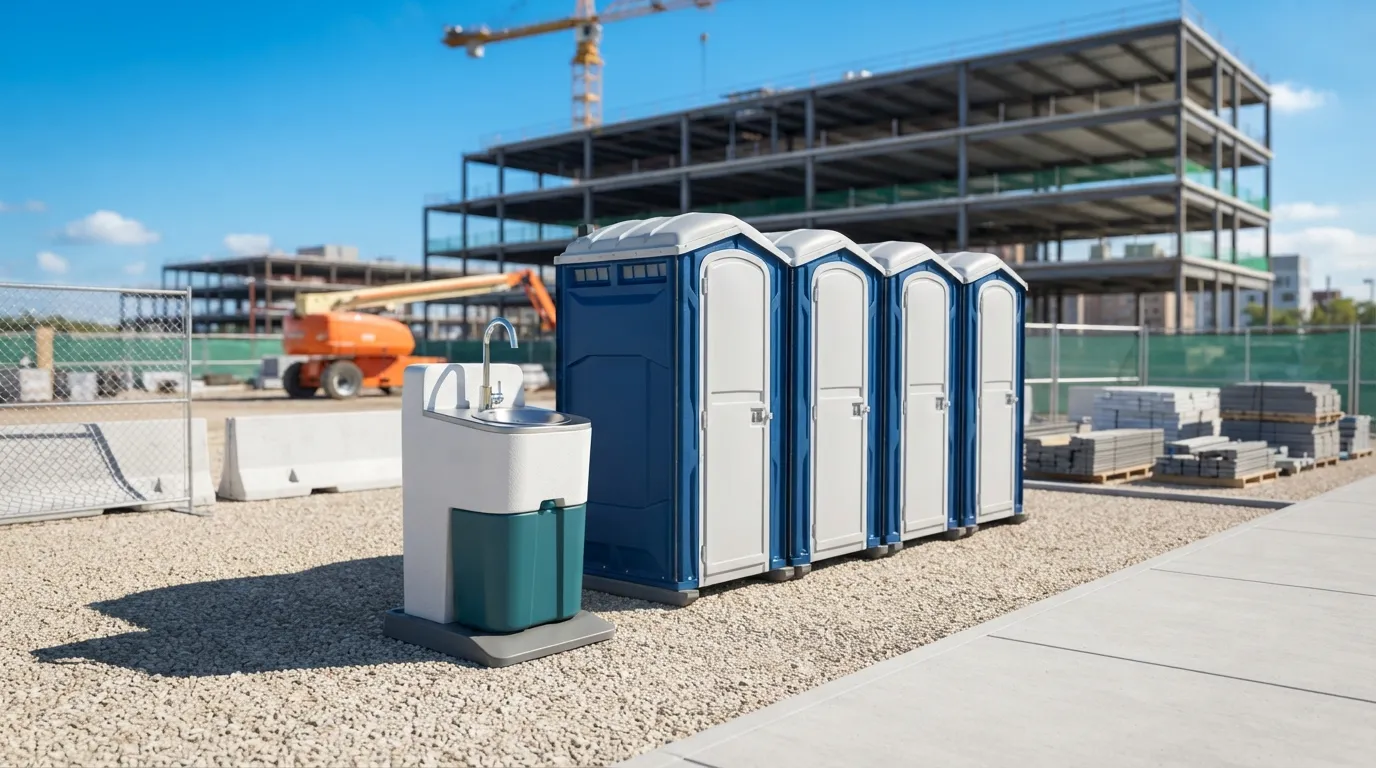
Placement rules exist to keep the unit stable, servable and out of the way, and OSHA 1926.51(c)(1) governs how many units a jobsite needs based on crew size, not where they physically sit. A crew of 20 or fewer needs one toilet facility; between 20 and 200 workers, the ratio moves to one seat and one urinal per 40 workers. Beyond the headcount math, which you can run yourself using how many porta potties do I need, practical placement matters more than most people expect. The ground needs to be level and firm, ADA Standards 302.1 calls for stable, firm and slip-resistant surfaces, and that standard is worth following even on non-ADA units because it keeps the unit from tipping. If you're renting an ADA accessible porta potty, ADA Standards 213.2 requires at least 5 percent of clustered units to be accessible, with a minimum of one, and ADA Standards 304.3.1 calls for a 60 inch turning circle in front of the door. Our porta potty placement guide covers clearance, service truck access, and wind exposure in more detail.
Where Can You Place a Porta Potty Without a Permit?
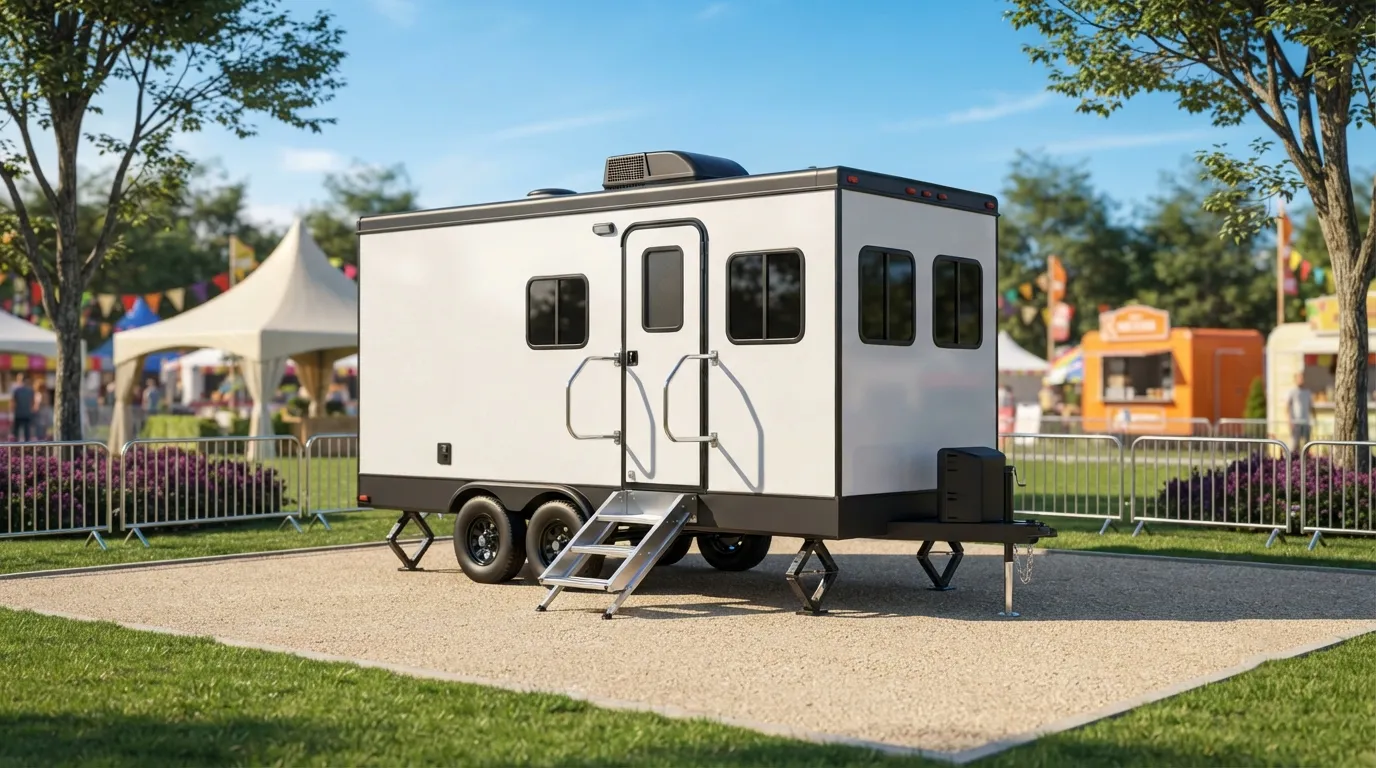
Private property is the safest answer: your own driveway, yard, or a fenced jobsite. Problems start at the property line. A unit that overhangs a sidewalk, sits in a parking lane, or blocks a fire lane usually needs city approval no matter how far it is from a residential neighborhood. For events, this question comes up constantly. A wedding restroom rental at a private venue rarely needs a permit; a festival restroom rental closing off a city street almost always does. If you're near the edge of town, distance doesn't exempt you from the same rule. San Luis sits about 28.8 miles west of Yuma, and Somerton is roughly 20.7 miles northwest, but both fall under their own city's right-of-way rules, not Yuma's, so confirm locally rather than assuming Yuma's answer travels with you. Rancho Mesa Verde, 19.1 miles northwest, and Padre Ranchitos, 22.5 miles northwest, work the same way. Check our service areas page for coverage, and see porta potty rental in Yuma for the city-specific overview.
Do I need a permit to put a porta potty on my own property in Yuma?
Usually not. Private-lot placement for a standard porta potty rental or a deluxe flushable porta potty typically doesn't trigger permitting the way street or sidewalk placement does. Confirm with the city if your lot borders a public easement.
Does a temporary power pole need a permit?
Often yes, since it involves an electrical connection to the grid, and requirements vary heavily by jurisdiction. See temporary power pole for setup details, and check with Yuma's building or electrical department before installation, since we haven't verified a specific local rule here.
What is the OSHA rule for toilets on a construction site?
OSHA 1926.51(c)(1) sets the ratio: one facility for crews of 20 or fewer, one seat and one urinal per 40 workers up to 200. Read the full breakdown on OSHA portable toilet requirements before you order for a crew.
Do I need a permit for a storage container in my driveway?
Driveway placement on private property usually doesn't need a permit, similar to porta potties and dumpsters. Street or curb placement is the trigger. See storage container rental for sizing, and confirm curb placement with the city first.
Can I get a porta potty delivered without a permit for a one-day event?
Often yes, especially on private land, but short events on public streets or in parks may still need paperwork. Check emergency porta potty rental for fast turnarounds, and call the city if your event touches public property.
Next step
Get a delivery date
Tell us the address, the dates and the headcount. We size the order and confirm the route.